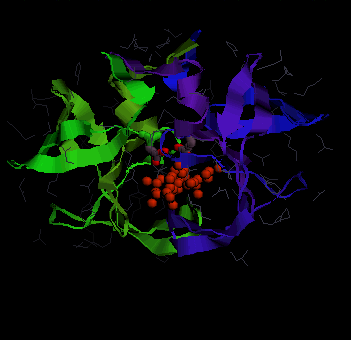
| Recent development of effective HIV protease inhibitors has revolutionized treatment of AIDS patients when these inhibitors are combined with other anti-viral drugs. HIV protease serves a critical role in the replication of virus in infected human cells. Specifically, it cleaves the single, long polypeptide encoded by the viral genome, thereby generating the essential proteins needed for viral maturation. The biochemical basis for inhibition of HIV protease is illustrated by the structure at the right where a pepstatin inhibitor is visibly bound to the active site formed by a pocket between the two identical subunits of this enzyme (shown in green and blue). The inhibitor specifically blocks substrate entry and the catalytic activities of two centrally located aspartate residues which are revealed through a series of Jmol buttons below. |
|